Does paying people fairly improve research quality?
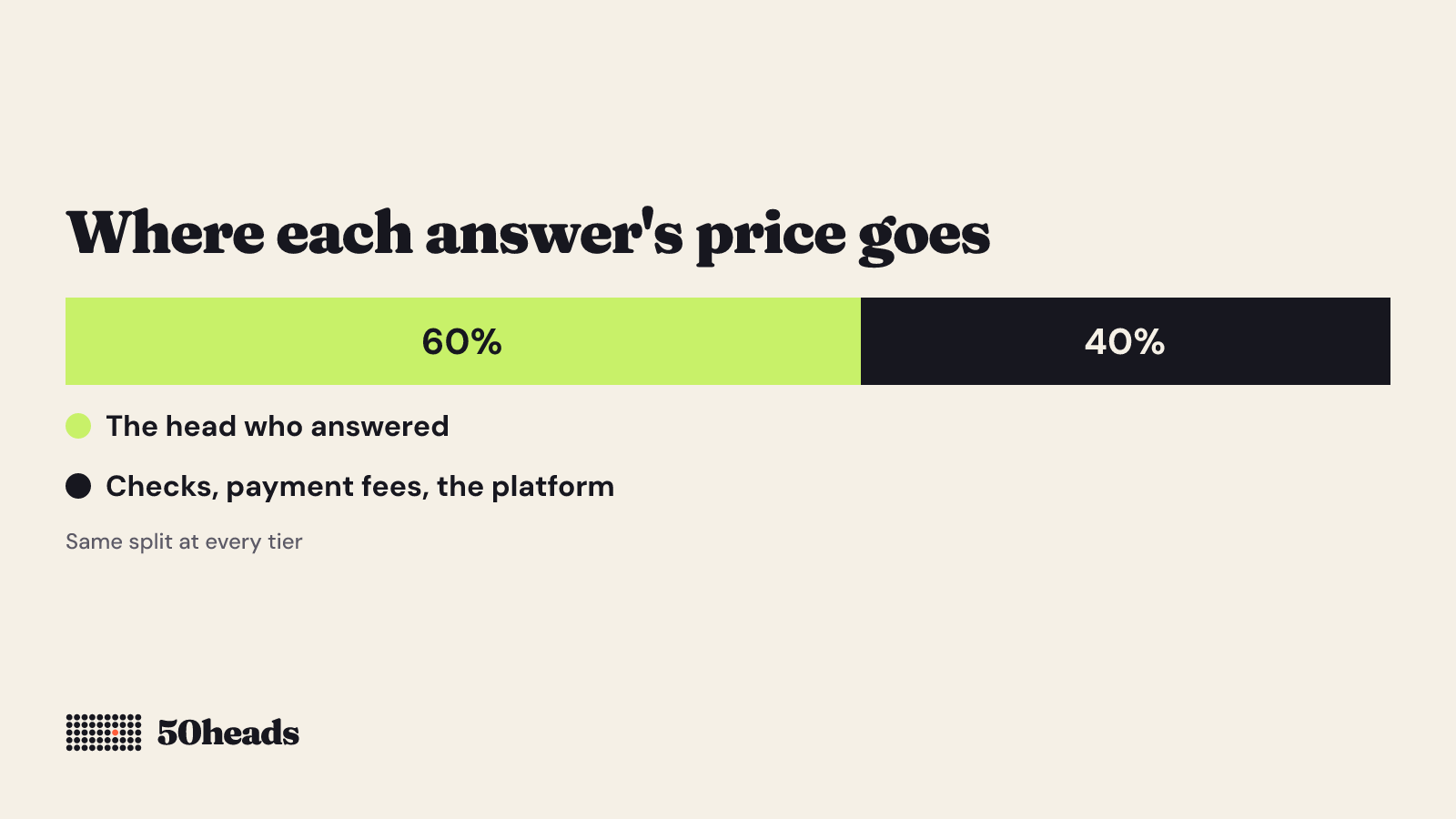
What the evidence says about pay and data quality, what it does not show, and exactly how 50heads splits what a requester pays between the head, verification and the platform.
O dobrym pytaniu, uczciwym odpowiadaniu i uczciwym płaceniu ludziom.
What the evidence says about pay and data quality, what it does not show, and exactly how 50heads splits what a requester pays between the head, verification and the platform.
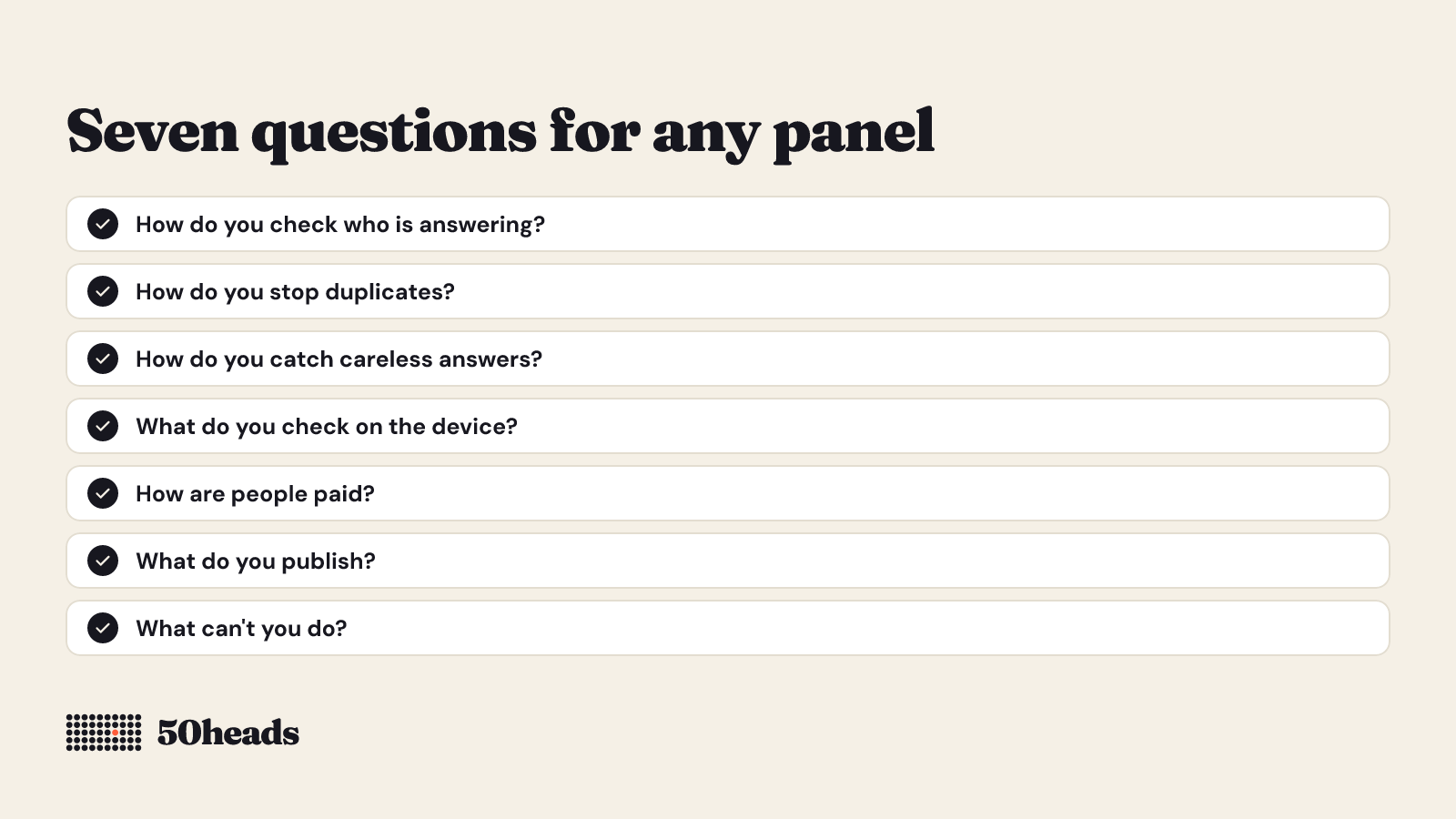
Seven questions to put to any online research panel, covering identity, duplicates, attention, device signals, pay, transparency and appeals, with an honest list of where 50heads is still limited.
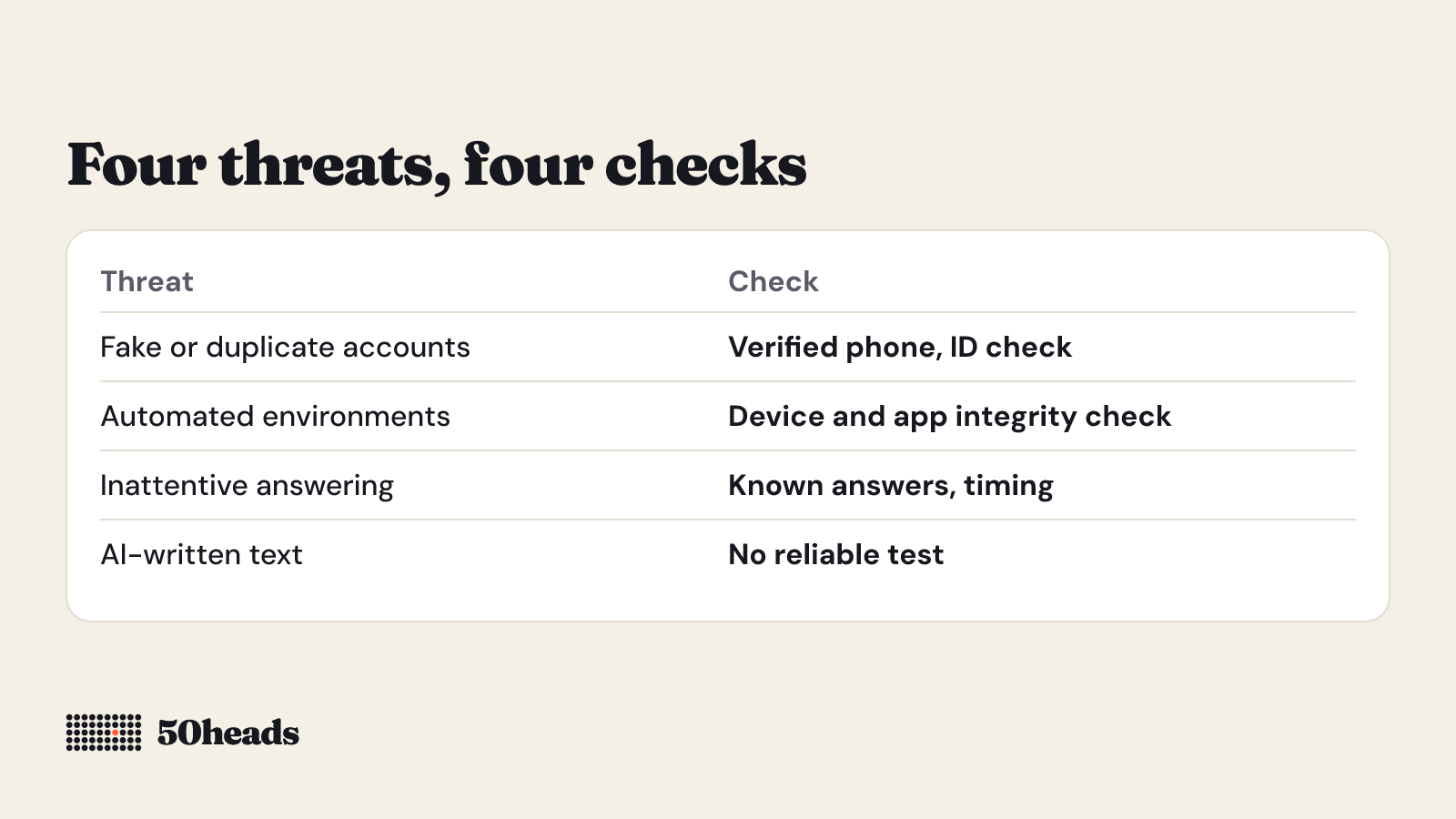
Four different threats to online answers, fake accounts, automated environments, inattentive people and AI-written text, and the check that addresses each. What 50heads checks, what it does not claim, and questions to ask any provider.
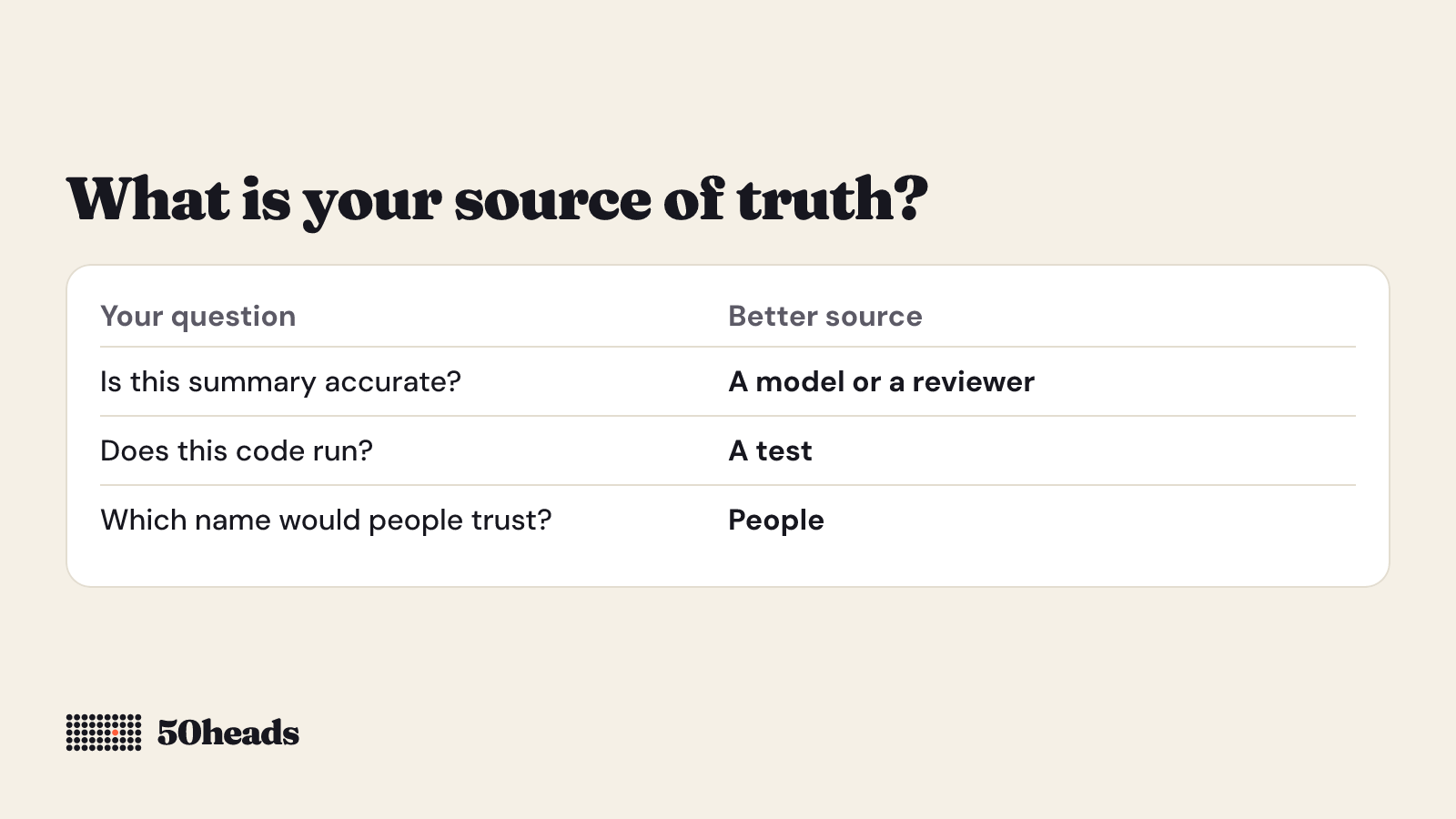
A plain way to decide when an AI model can give you the feedback you need and when you need to ask people, based on what your source of truth is: language quality, factual reasoning or human taste.
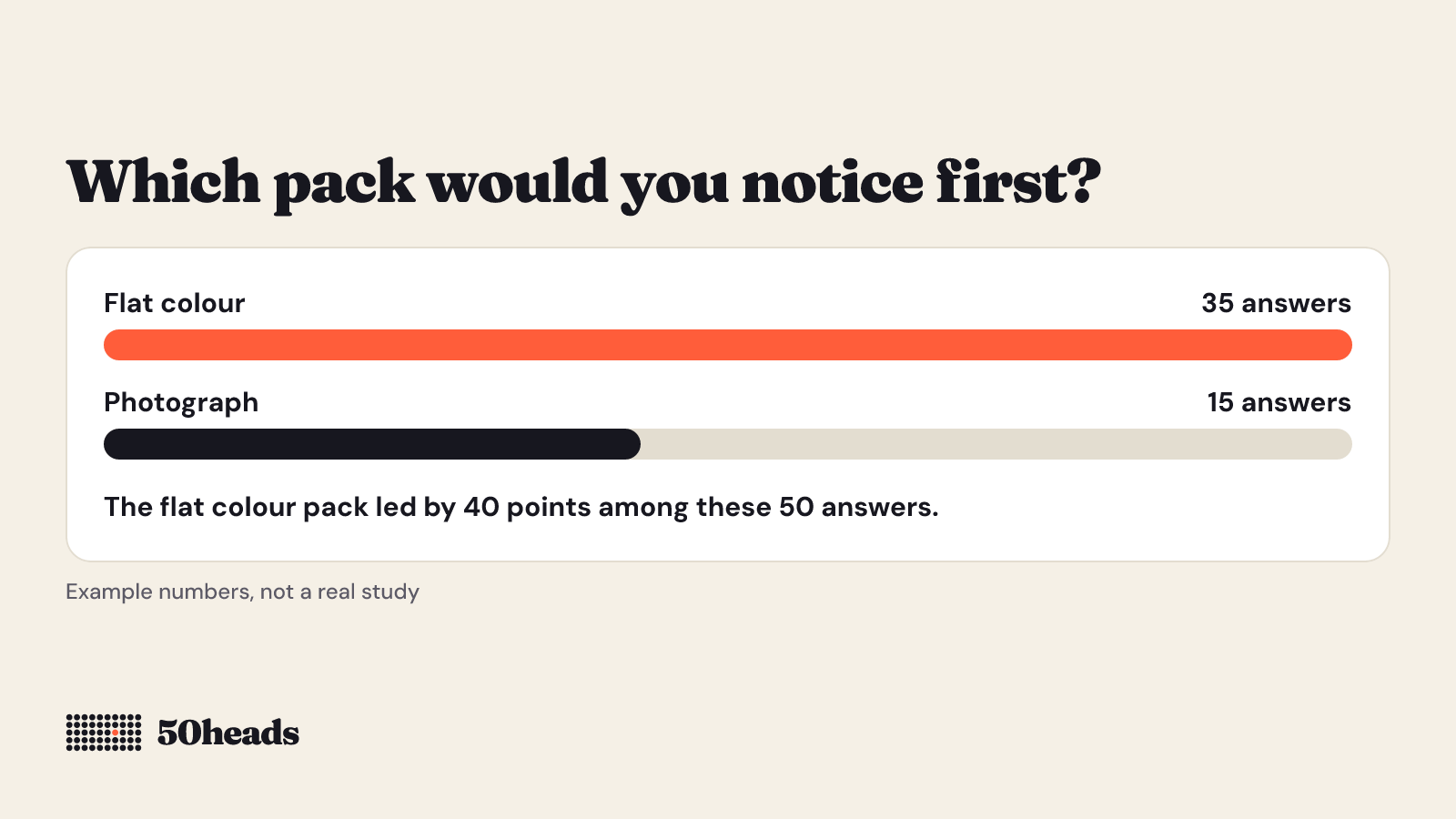
How to compare packaging designs one quality at a time, including shelf stand-out, trust, premium feel and clarity, with a test order, a worked example and the limits of testing on a phone screen.
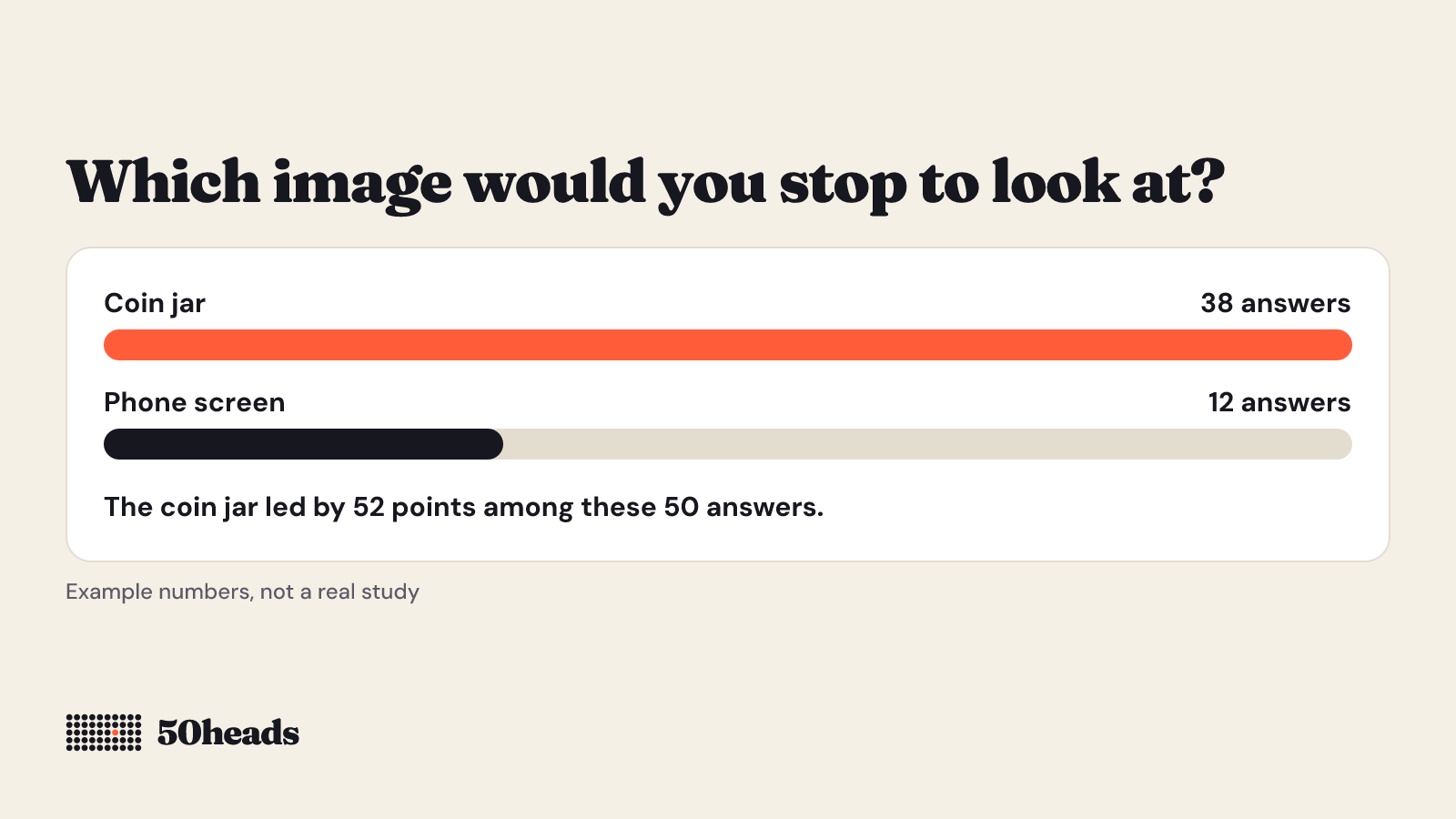
How to compare ad images, hooks and copy with a quick one-question test before you pay for media, which questions to ask for each, and why it does not replace live conversion data.
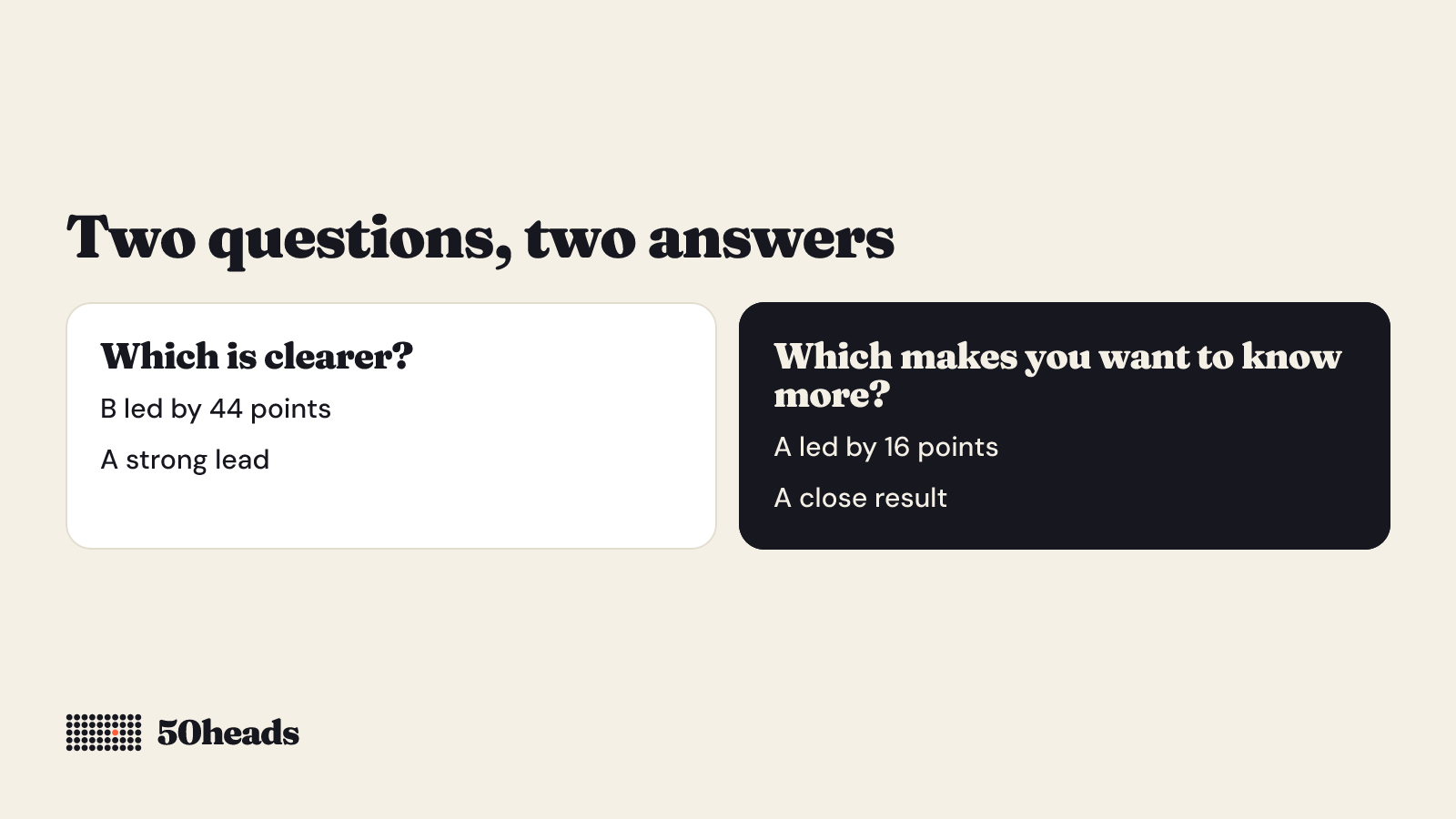
How to test whether a headline is clear and whether it makes people want to know more, as two separate questions, before you pay for a live A/B test, with a worked example and the limits.
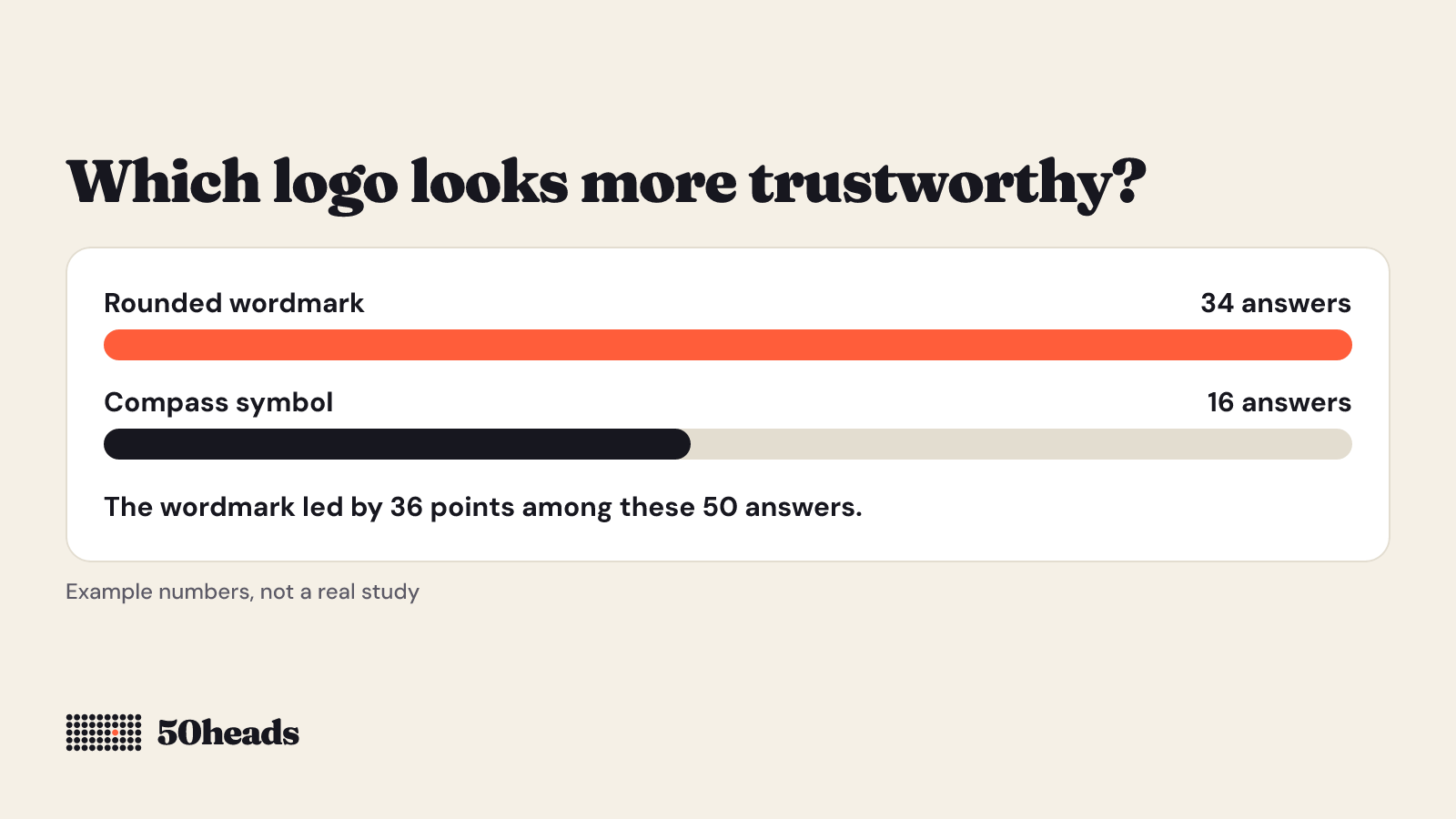
How to compare logo designs with outside people, one criterion at a time, including recognition, trust and category fit, and why a preference result is not a verdict on design quality.
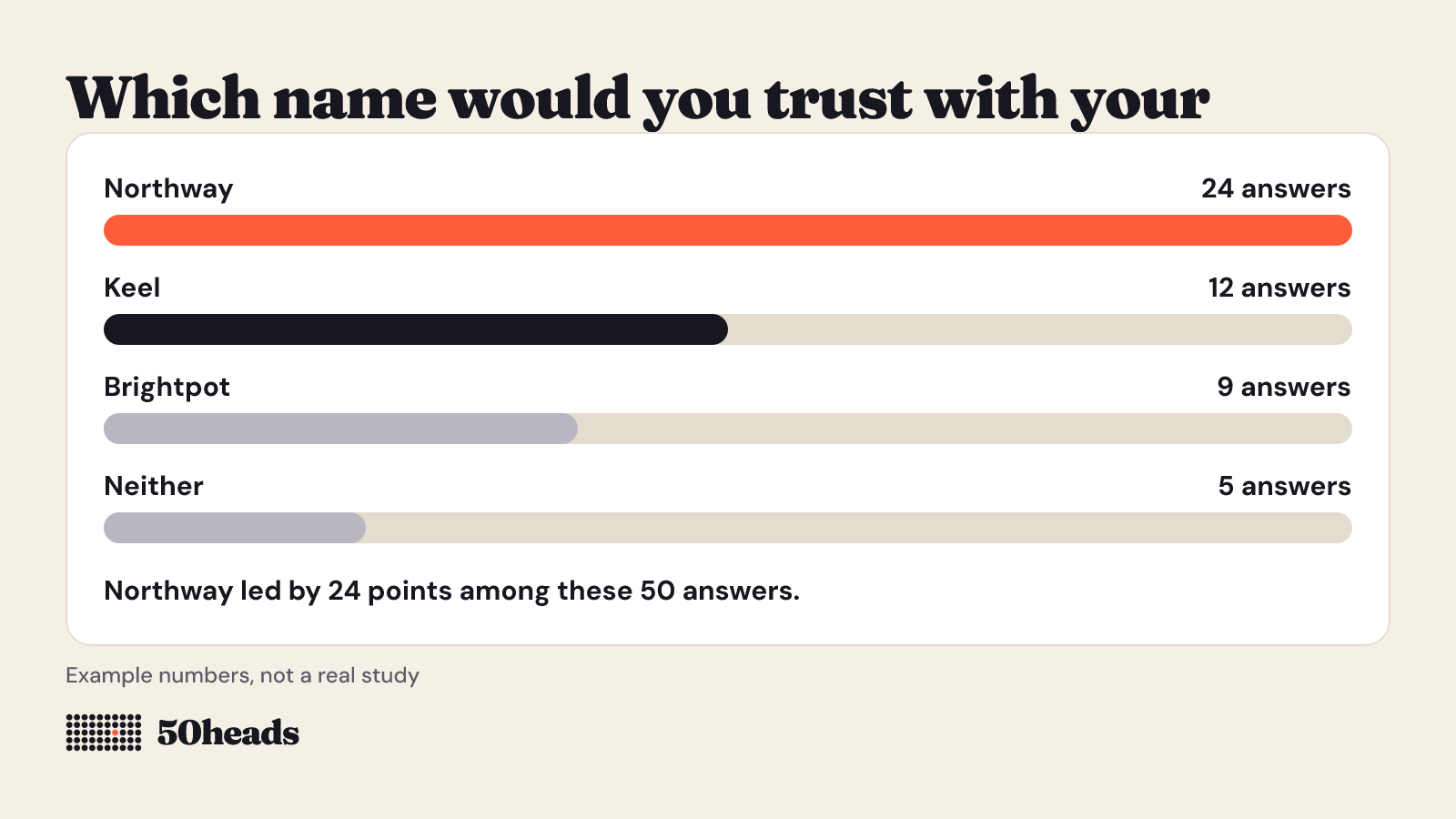
A repeatable way to test product or brand names with one question per criterion, such as trust, memorability or fit, instead of "Which do you like?", with a worked example and the limits of a name test.
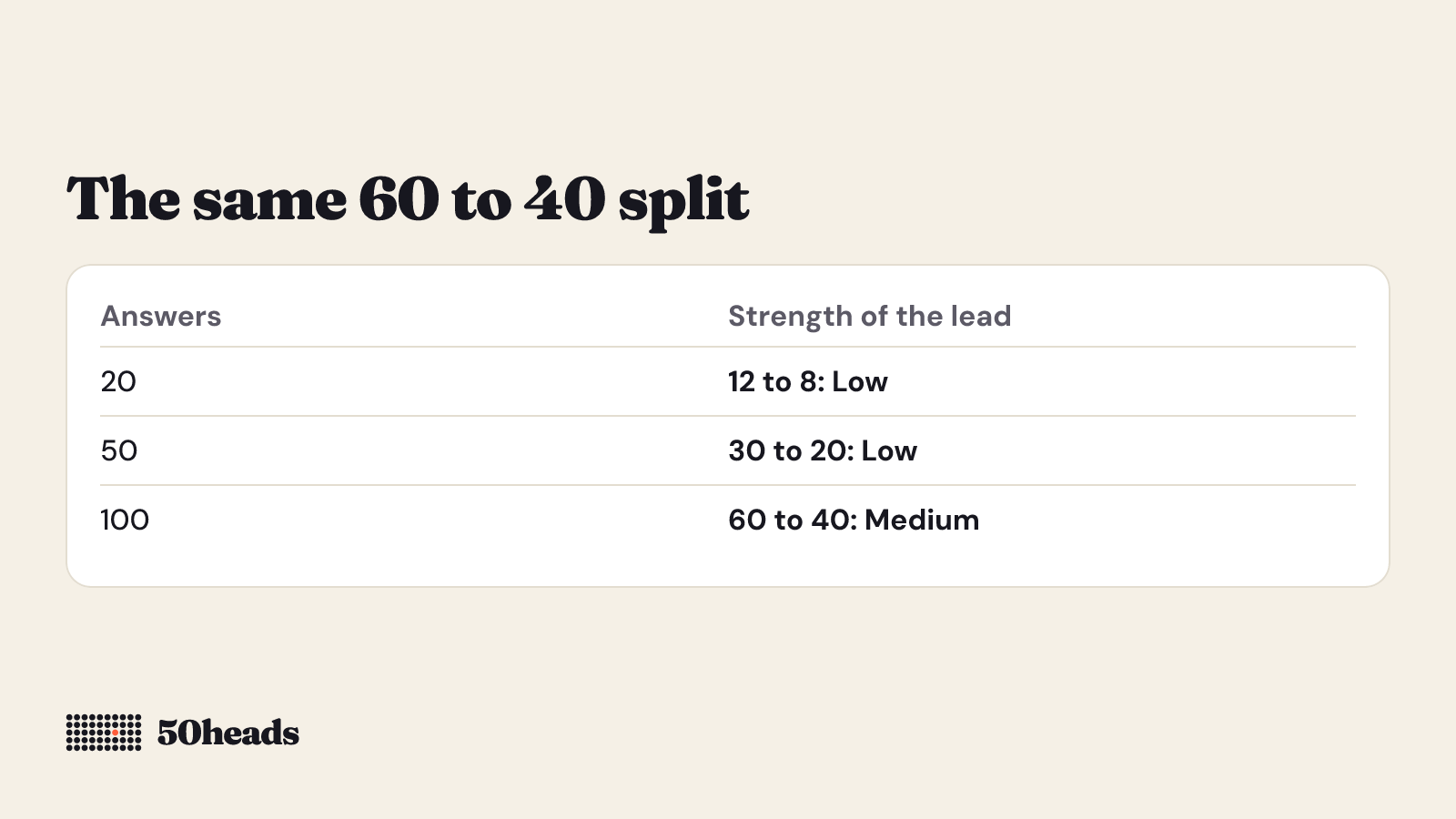
What 20, 50 and 100 answers can and cannot tell you in a preference test, with worked examples of how the same split reads differently at each size.
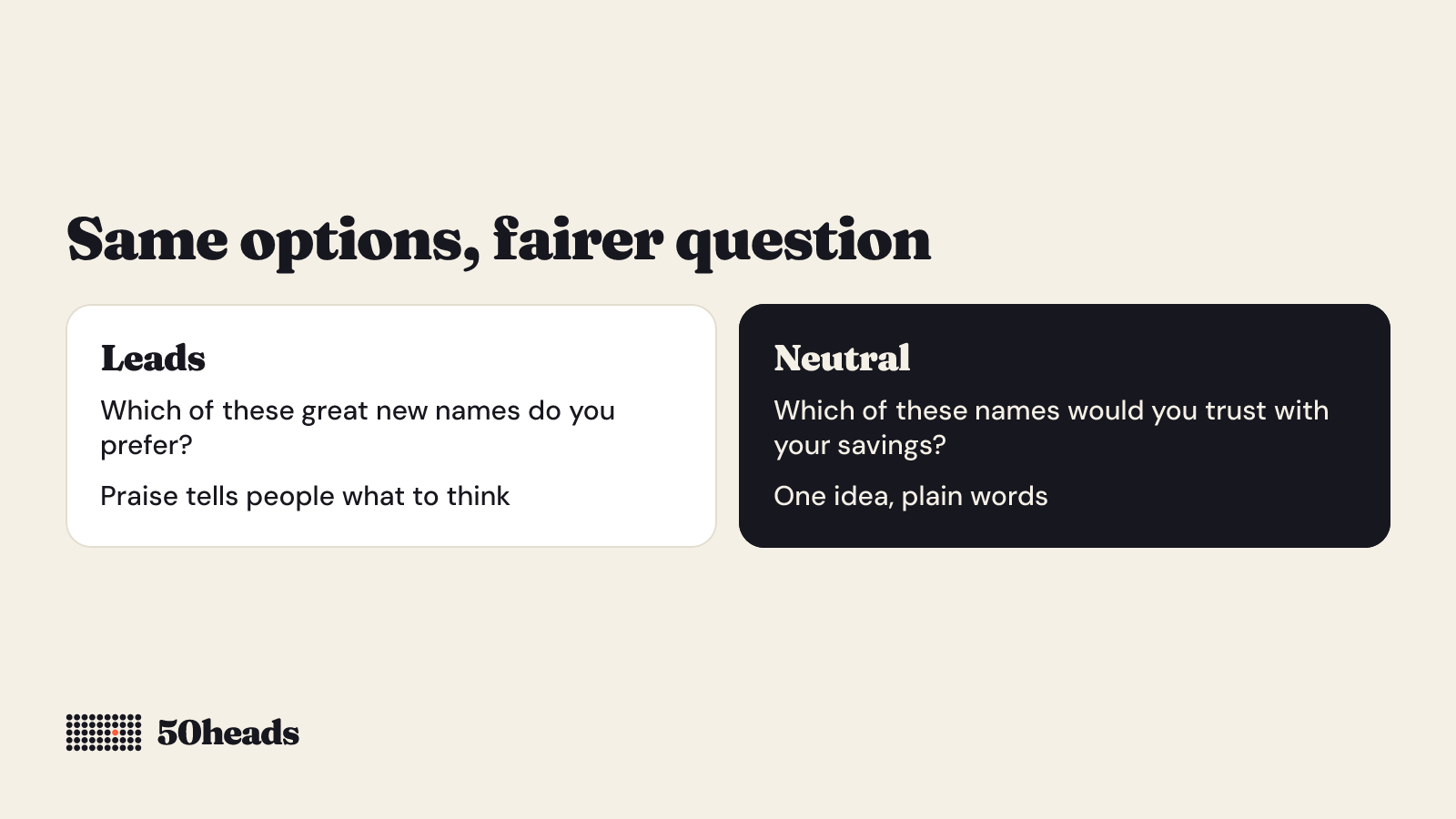
Five ways a question steers the answer, each with a before and after, and a short checklist for writing short, neutral questions.
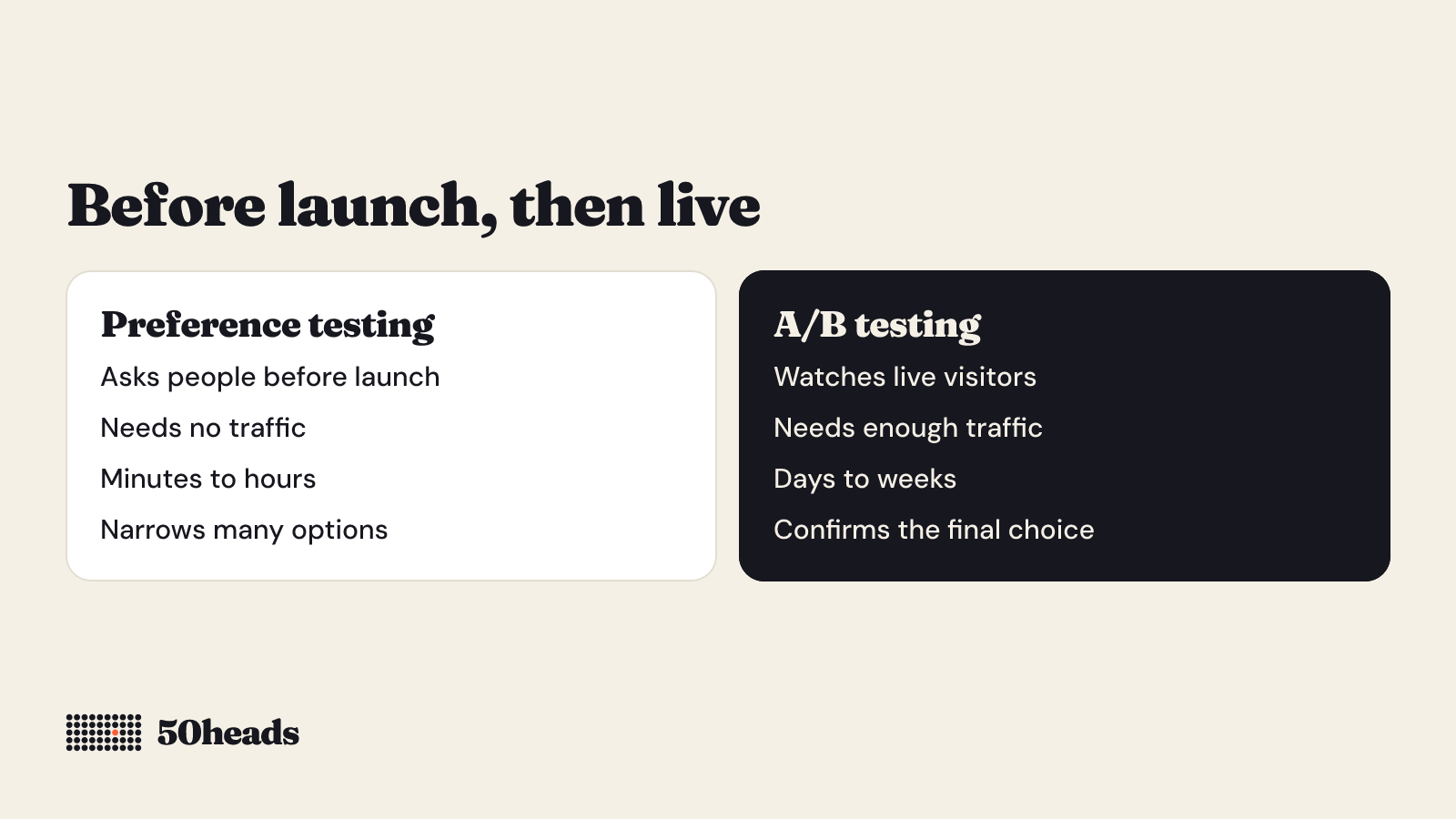
A/B testing watches what live visitors do. Preference testing asks people to choose before launch. A plain comparison of traffic, speed, risk and what each measures, and how to use both in order.